Understanding Why Aggression Happens in Dementia
Aggression in dementia stems from progressive brain damage that impairs information processing, communication, and emotional regulation. When cognitive function declines, people with dementia lose the ability to understand their environment, express needs clearly, or control impulse responses. What appears as anger or violence is often fear, confusion, or frustration manifesting through their only available outlet.
The person isn’t trying to hurt you. They’re reacting to a world that no longer makes sense. A caregiver’s hand reaching toward their face might feel like an attack. A bath might seem threatening. Noise, unfamiliar faces, or routine changes can trigger panic. Handle dementia aggression by recognising it as a symptom of cognitive decline, not a character flaw or choice.
Research from the Alzheimer’s Society highlights that behavioural changes, including aggression, are driven by neurological changes rather than intention. This reframes how caregivers approach the situation. Instead of taking aggression personally, effective carers view it as communication, a sign that something in the person’s environment, routine, or physical state is causing distress.
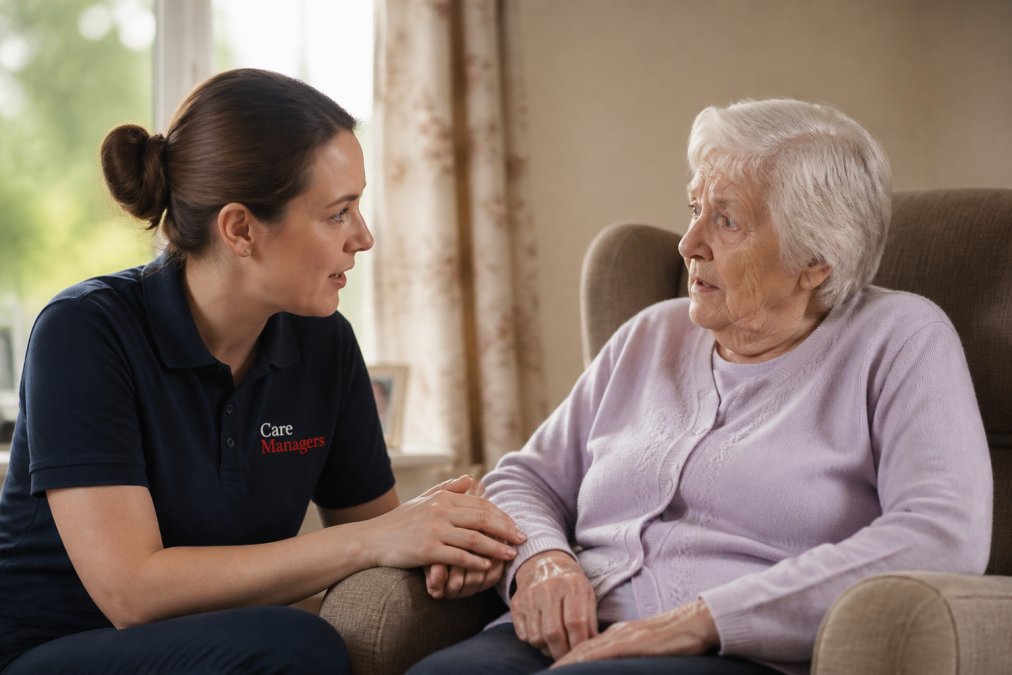
Professional caregiver speaking calmly to an older person with dementia in a softly lit living room with comfortable seating and warm natural light
Key Takeaway
Dementia aggression is a neurological symptom, not a choice. The person is expressing fear, confusion, or unmet needs, not attacking you intentionally. This shift in perspective is the foundation of effective caregiving.
Identifying Triggers for Dementia Aggression
Identifying what triggers aggressive behaviour allows you to prevent incidents before they happen. Common triggers include pain, hunger, fatigue, overstimulation, unfamiliar environments, or routine changes. However, triggers are deeply individual.
Start by observing patterns. Keep a simple log: note the time, what happened immediately before aggression, the person’s physical state (hungry, tired, in pain), and the environment (noisy, crowded, new people present). Over time, patterns emerge, aggression might always occur at 4 p.m. when tired, or when a particular carer arrives, or after a bath.
Physical discomfort is one of the most overlooked triggers. A urinary tract infection, constipation, dental pain, or medication side effects can cause profound agitation (peer-reviewed research). If aggression escalates suddenly, consult a GP to rule out infection or medical issues before assuming it’s purely behavioural.
Environmental triggers matter enormously. Loud television, multiple conversations, bright fluorescent lighting, or unfamiliar visitors can overwhelm someone whose brain struggles to process sensory input. A quiet environment with familiar faces and soft lighting often prevents aggression altogether.
Routine changes trigger anxiety and confusion. If a person expects their carer at 10 a.m. and they arrive at 10:30 a.m., the disruption can cause distress. Consistency is protective.
Pro Tip
Keep a simple trigger log for one week: note the time, what preceded aggression, the person’s physical state, and who was present. Patterns usually emerge within days. Use these patterns to prevent future incidents.
De-escalation Techniques for Dementia
De-escalation is the art of calming a person before aggression escalates to violence. Effective de-escalation requires patience, a calm demeanour, and techniques tailored to the individual.
Stay calm yourself. Your emotional state directly affects the person with dementia. If you are anxious, frustrated, or angry, they will sense it and escalate further. Take a breath, lower your voice, and slow your movements. Project calm through your body language, facial expression, and tone.
Create physical safety. Never corner a person or block their exit. Give them space. Position yourself at an angle rather than directly facing them. Keep your hands visible and move slowly.
Use simple, clear language. People with dementia struggle with complex sentences. Use short, concrete phrases. Instead of "We need to go upstairs now because it’s time for your bath," try "Let’s go upstairs." Avoid questions requiring complex reasoning.
Validate their feelings, not their reality. If someone believes it’s 1985 and they need to pick up their children from school, don’t argue. Instead, validate the emotion: "You sound worried about your children. I can help you with that." Then gently redirect.
Use distraction and redirection. If someone insists on leaving because they think they’re late for work, arguing won’t help. Instead, redirect: put on their favourite music, offer a snack, or suggest a familiar activity.
Avoid triggers in the moment. If bathing triggers aggression, offer it when the person is calm and rested. Prevention is far more effective than de-escalation after aggression has started.

Caregiver maintaining calm body language, speaking gently at eye level with an older person showing signs of agitation in a quiet, softly lit room
Communication Strategies That Work
Communication barriers are central to dementia aggression. Bridging this gap reduces frustration on both sides.
Use non-verbal communication. People with advanced dementia often understand tone, facial expression, and touch better than words. A gentle hand on the shoulder, a warm smile, or soft eye contact communicates safety and respect.
Listen actively, even to words that don’t make literal sense. If someone says "I need to go to the factory," they may be expressing a need for purpose or activity. Listen for the underlying emotion and address that.
Speak about the person, not to them or past them. Include them in conversations, use their preferred name, and wait for responses. This preserves dignity and reduces the sense of being invisible.
Watch Out
Avoid correcting or arguing about facts the person has wrong. Correcting triggers defensiveness and escalates conflict.
Creating a Calm Environment
The physical environment profoundly influences behaviour. A chaotic space increases agitation; a calm, predictable environment reduces it.
Reduce sensory overload. Lower the volume on television and radio. Limit the number of people present at one time. Use soft, warm lighting rather than harsh fluorescent lights. Keep the home uncluttered and organised.
Maintain consistent routines. Perform daily activities in the same order, at the same times, with the same people when possible. This predictability reduces anxiety.
Ensure physical comfort. The environment should be at a comfortable temperature with access to water, appropriate seating, and a clean, safe bathroom.
Encourage appropriate activity. Familiar activities, gardening, cooking, listening to music, looking at photos, provide purpose and calm. The activity should match the person’s abilities.
Physical Safety for Caregivers
Handling dementia aggression carries real physical risks. Protecting yourself is essential.
Recognise early warning signs. Pacing, clenched fists, raised voice, or rapid breathing often precede physical aggression. When you notice these signs, increase your distance, remove potential weapons, and call for backup if available.
Never restrain someone unless absolutely necessary for immediate safety. Restraint often escalates aggression. If someone is in immediate danger, move them to a safe space and call emergency services.
Call us for Free Assessment Today →
Wear appropriate clothing and footwear. Avoid dangling jewellery, scarves, or long hair that can be grabbed. Wear shoes with good grip and support.
Know your limits. If you feel unsafe or unable to manage a person’s aggression, professional support, specialist care homes, or respite care may be necessary.
Watch Out
If you are injured or feel physically threatened, seek medical attention and report the incident. Escalating aggression or violence requires professional intervention.
The Role of Routine and Structure
Routine is protective. It reduces anxiety, provides orientation, and creates predictability in a world that no longer makes sense.
Establish a daily schedule and stick to it. Wake at the same time, eat meals at the same times, perform personal care at the same times. The person may not remember the schedule, but their body and mind learn it.
Use visual cues to support routine. A calendar on the wall, a written schedule, or photos showing the day’s activities help orient the person and reduce uncertainty.
Build flexibility within structure. While consistency is important, rigid adherence can create conflict if circumstances change. Have a backup plan.
Involve the person in activities that match their abilities and interests. These activities provide purpose, engagement, and a sense of contribution, all protective factors against agitation.
Recognise that routine needs change as dementia progresses. Regularly review the person’s responses and adjust as needed.
When to Seek Professional Help for Dementia
Knowing when to seek professional support is crucial for the safety and wellbeing of both the person and the caregiver.
Seek medical evaluation if aggression is new or escalating. A GP should rule out underlying medical causes: infection, medication side effects, pain, or other conditions.
Consider specialist dementia services if aggression is frequent, severe, or causing injury. A dementia specialist can assess needs, review medications, and recommend tailored strategies.
Respite care provides temporary relief for family caregivers. A few days or weeks in a care setting allows the primary caregiver to rest and recharge, preventing burnout.
Live-in care may be necessary if aggression is severe or the person’s needs exceed what family caregivers can safely manage.
Psychiatric assessment is appropriate if aggression is accompanied by hallucinations, severe paranoia, or self-harm.
Managing Dementia Aggression: Legal and Emergency Protocols
Understanding your rights and responsibilities protects you legally and ensures appropriate responses to serious incidents.
If someone is in immediate danger of harming themselves or others, call 999. Emergency services are trained to handle psychiatric crises.
Know the Mental Capacity Act 2005 (gov.uk). This legislation governs decision-making for people who lack capacity. Decisions should be made in their best interests, ideally with input from family members and healthcare professionals.
Document incidents. If aggression causes injury, damage property, or results in emergency services being called, keep records: dates, times, what happened, injuries sustained, and actions taken.
Safeguarding is a legal responsibility. If you suspect abuse, neglect, or exploitation, contact the local authority’s safeguarding team or the police.
Understand your liability. If you’re a family caregiver, you’re generally not liable for the person’s aggressive actions if you’ve taken reasonable steps to manage their behaviour and prevent harm.
Situation
Immediate Action
Follow-up
Severe aggression with injury
Call 999
Document incident, seek medical evaluation
Escalating pattern over weeks
Contact GP for assessment
Consider specialist dementia services
Aggression causing caregiver burnout
Arrange respite care
Evaluate long-term care options
Suspected medical cause
GP appointment within 48 hours
Medication review, infection screening
Aggression in care setting
Report to care provider immediately
Review care plan, consider alternative placement
Handling dementia aggression is one of the most challenging aspects of caregiving. It requires patience, understanding, and a willingness to adapt as the person’s needs change. De-escalation, environmental modification, routine, and knowing when to seek help form the foundation of safe, compassionate care.
If you’re managing dementia aggression alone, you don’t have to continue that way. Professional support transforms the experience for both you and the person you’re caring for. Care Managers provides specialist dementia care with carers trained in de-escalation, behavioural management, and person-centred approaches. Whether you need respite care, live-in support, or home care tailored to complex needs, our team works with you to create a plan that keeps everyone safe whilst preserving dignity and independence. Book a call with us today to discuss your specific situation and explore how we can help.